
Longevity and Healthy Aging: Why Starting Early Matters
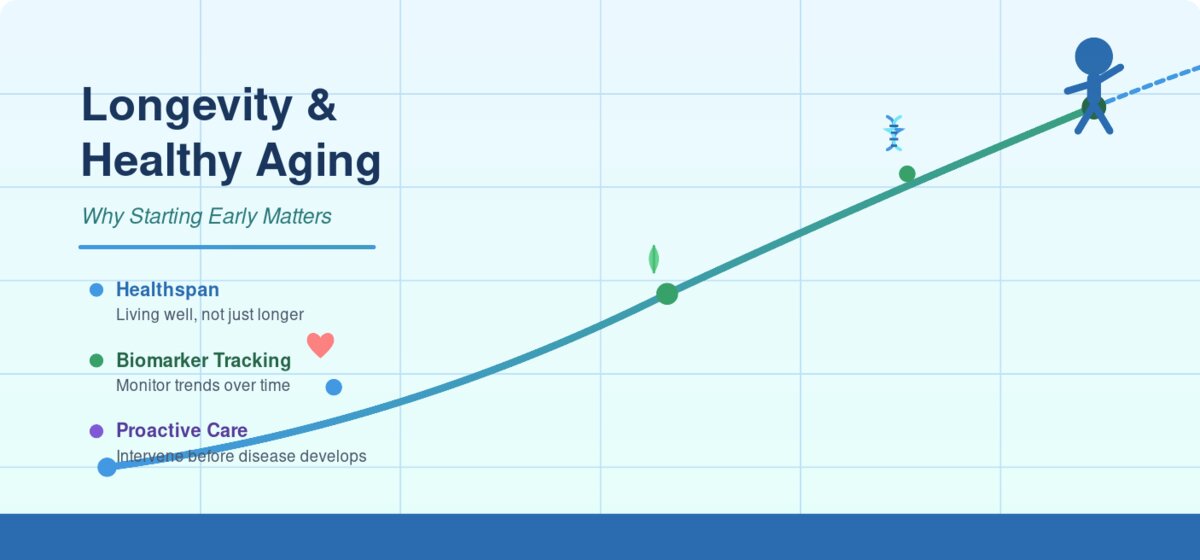
Aging is inevitable — but how gracefully and healthfully we age is not.
Longevity science has shifted the conversation from simply living longer to living better for longer. Healthspan — the number of years we live in good health — is now considered just as important as lifespan.
One important concept in this field comes from the article
“Dynamic Determinants of Longevity and Exceptional Health” (Curr Gerontol Geriatr Res 2010;2010:381637)
🔗 https://onlinelibrary.wiley.com/doi/full/10.1155/2010/381637
This research emphasizes a powerful idea: it is not just a single lab value that predicts long-term health — it is how biomarkers change over time.
In other words, aging is dynamic.
Small shifts in metabolic, inflammatory, cardiovascular, and hormonal markers — even when still “normal” — can predict future disease risk if trends move in the wrong direction. Tracking trajectories matters more than snapshots.
This reinforces an essential longevity principle:
👉 Start early.
👉 Track consistently.
👉 Intervene proactively.
Waiting until disease develops is reactive medicine. Monitoring trends before symptoms appear allows for earlier, often more effective intervention.
What Are Biomarkers?
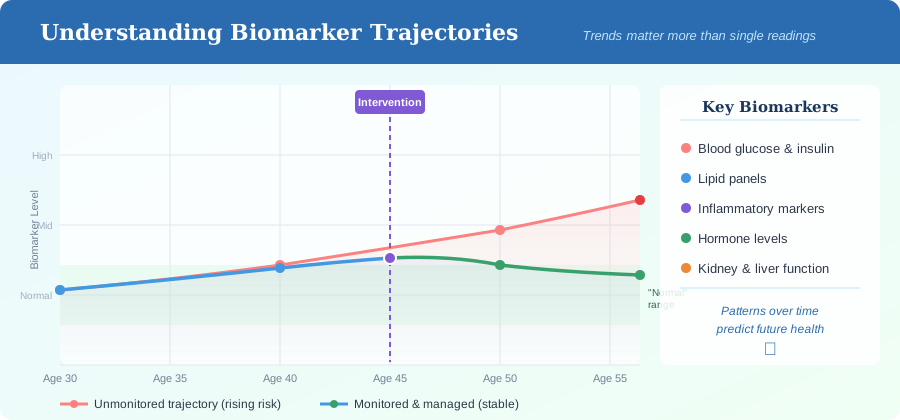
Biomarkers are measurable indicators of biological processes. Examples include:
- Blood glucose and insulin
- Lipid panels
- Inflammatory markers
- Hormone levels
- Kidney and liver function tests
These values give us a real-time window into how the body is aging biologically — not just chronologically.
Research suggests that longitudinal patterns of these biomarkers are stronger predictors of health outcomes and mortality than single isolated measurements.
When we monitor patterns over time, we can:
- Detect rising insulin resistance early
- Identify increasing inflammatory burden
- Recognize subtle hormonal decline
- Adjust lifestyle or medical strategies before chronic disease develops
This is the foundation of proactive longevity care.
Where Do Medications Fit In?
Lifestyle remains the cornerstone of healthy aging. But certain medications that target metabolism are increasingly being studied for their potential to extend healthspan.
In this series, we’ll explore three commonly discussed options:
- GLP-1 receptor agonists
- Acarbose
- Metformin
Importantly, these medications are not “anti-aging pills.” Rather, they may improve healthspan by targeting mechanisms that drive age-related disease.
🧬 GLP-1 Receptor Agonists and Longevity
Article:
http://“Glucagon-like peptide-1 receptor agonists to expand the healthy lifespan: Current and future potentials” 🔗 https://pmc.ncbi.nlm.nih.gov/articles/PMC10186594/
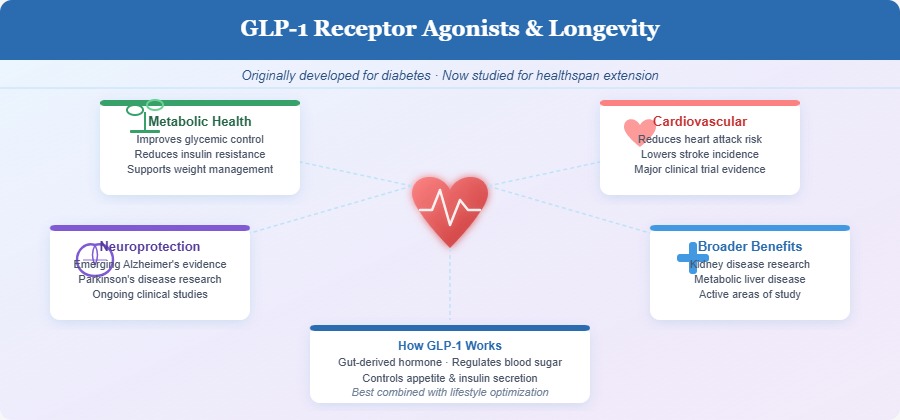
GLP-1 receptor agonists (GLP-1 RAs) were originally developed to treat type 2 diabetes. They are now widely used for metabolic health and weight management.
What is GLP-1?
GLP-1 is a gut-derived hormone that helps regulate:
- Blood sugar
- Insulin secretion
- Appetite
- Gastric emptying
Medications that mimic GLP-1 improve metabolic control and reduce cardiovascular risk.
Why They Matter for Healthy Aging
The 2023 review highlights several potential healthspan benefits:
1️⃣ Metabolic Health
- Improve glycemic control
- Reduce insulin resistance
- Promote weight loss
- Lower obesity-related risk
Since metabolic dysfunction accelerates aging and drives many chronic diseases, improving this foundation is critical.
2️⃣ Cardiovascular Protection
Large clinical trials show GLP-1 RAs reduce major cardiovascular events such as heart attack and stroke — leading causes of mortality.
3️⃣ Potential Neuroprotection
Emerging evidence suggests possible protective effects against neurodegenerative diseases, including Alzheimer’s and Parkinson’s disease.
4️⃣ Broader Disease Applications
GLP-1 therapies are being studied for:
- Chronic kidney disease
- Metabolic liver disease
- Neurodegenerative disorders
Big Picture
GLP-1 receptor agonists likely do not “slow aging” directly. Instead, they reduce the burden of diseases that shorten healthy years of life.
Used thoughtfully, and alongside lifestyle optimization, they may support healthier aging in selected individuals.
🧬 Acarbose and the Gut Microbiome
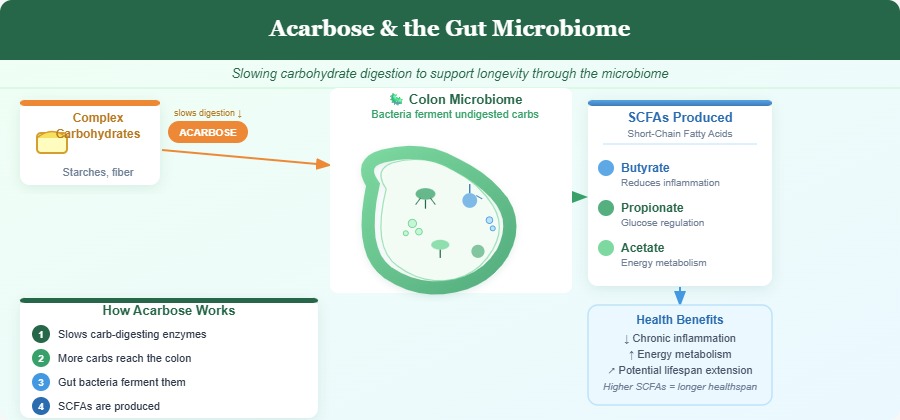
Acarbose is an older diabetes medication that slows carbohydrate digestion and reduces post-meal glucose spikes. Interestingly, it has shown lifespan-extending effects in animal studies.
1️⃣ Gut Microbiota and Fermentation Products
Dissertation:
http://Integrated Analysis of the Gut Microbiota and Their Fermentation Products in Mice Treated with the Longevity Enhancing Drug Acarbose
Acarbose allows more complex carbohydrates to reach the colon, where gut bacteria ferment them into short-chain fatty acids (SCFAs) such as:
- Butyrate
- Propionate
- Acetate
These SCFAs are associated with:
- Reduced inflammation
- Improved glucose regulation
- Enhanced energy metabolism
Higher SCFA levels have correlated with longer lifespan in animal models.
This suggests acarbose may influence longevity partly through microbiome modulation.
2️⃣ Acarbose and Survival in Cancer-Prone Mice
Article:
In this study, acarbose increased survival by approximately 15–21% in genetically engineered mice prone to cancer.
Notably:
- Improved survival occurred even without major tumor reduction at lower doses
- Benefits appeared linked to improved glucose and insulin control
This supports a key geroscience principle:
Improving metabolic signaling — not just suppressing disease — may extend lifespan.
3️⃣ Is Acarbose’s Effect Mediated by the Gut Microbiota?
Review Article:
http://“Extension of the Life Span by Acarbose: Is It Mediated by the Gut Microbiota?” 🔗 https://pmc.ncbi.nlm.nih.gov/articles/PMC9286917/
This review explores how acarbose may:
- Mimic aspects of caloric restriction
- Reduce post-meal glucose spikes
- Increase SCFA production
- Lower chronic inflammation
- Improve mitochondrial function
Together, these mechanisms intersect with several recognized hallmarks of aging.
🧠 Metformin and Longevity
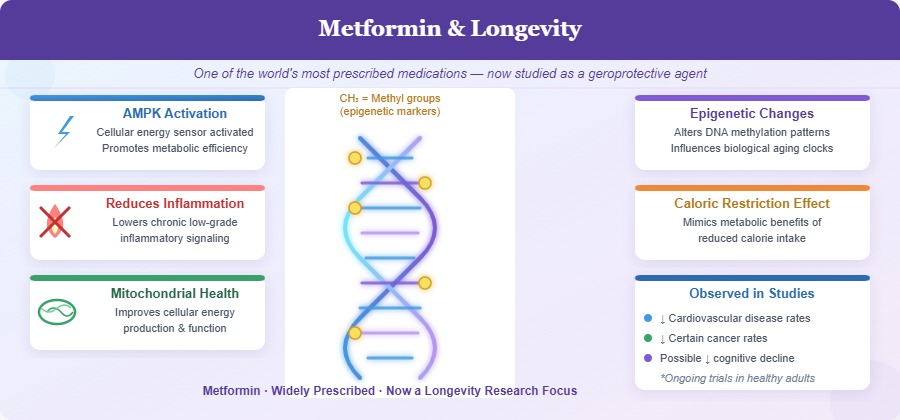
Metformin is one of the most widely prescribed medications worldwide. It is now being studied as a potential geroprotective drug.
1️⃣ Metformin and DNA Methylation
Article:
This study examined whether long-term metformin use is associated with epigenetic changes linked to aging.
Key Findings:
- Distinct DNA methylation patterns in metformin users
- Altered pathways related to inflammation, metabolism, and mitochondrial function
- Potential influence on biological aging processes
Epigenetic regulation is considered one of the hallmarks of aging, making these findings particularly interesting.
2️⃣ The Anti-Aging Role of Metformin
Article:
http://“The anti-aging role of metformin, clinical applications to pursue the longevity road” 🔗 https://link.springer.com/article/10.1007/s00238-024-02211-3
This 2024 review summarizes metformin’s potential longevity mechanisms:
- Activation of AMPK (a cellular energy sensor)
- Reduction in chronic low-grade inflammation
- Improved mitochondrial function
- Caloric restriction–like metabolic effects
Observational studies suggest metformin users may have lower rates of cardiovascular disease, cancer, and possibly cognitive decline — though definitive lifespan trials in healthy individuals are ongoing.
The Big Picture: Longevity Is Dynamic
Across all these studies, one message stands out:
Longevity is not about chasing a single “anti-aging” drug.
It is about:
✔ Monitoring biomarker trajectories
✔ Improving metabolic resilience
✔ Reducing chronic inflammation
✔ Supporting mitochondrial and cellular health
✔ Intervening before disease develops
The foundational concept from
“Dynamic Determinants of Longevity and Exceptional Health”
remains central: how your physiology changes over time predicts future health more than any one lab result.
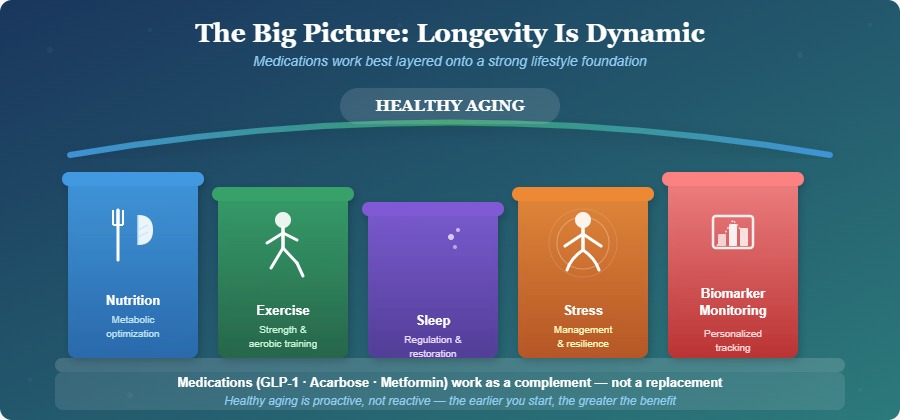
Medications like GLP-1 receptor agonists, acarbose, and metformin may complement this strategy in carefully selected individuals. But they work best when layered onto:
- Nutritional optimization
- Strength and aerobic training
- Sleep regulation
- Stress management
- Personalized biomarker tracking
Healthy aging is proactive, not reactive.
The earlier we begin tracking and optimizing our biological trajectory, the greater the opportunity to extend not just lifespan — but vibrant, functional years of life.
Take the next step:
Interested in a proactive, personalized approach to your health? Dr. Lalani at Bluebonnet Diabetes & Endocrinology can help you understand your biomarkers and create a plan for healthier aging. Contact us to schedule a consultation.